Wandering Icebergs: An Antarctic Family Looking for a New Home
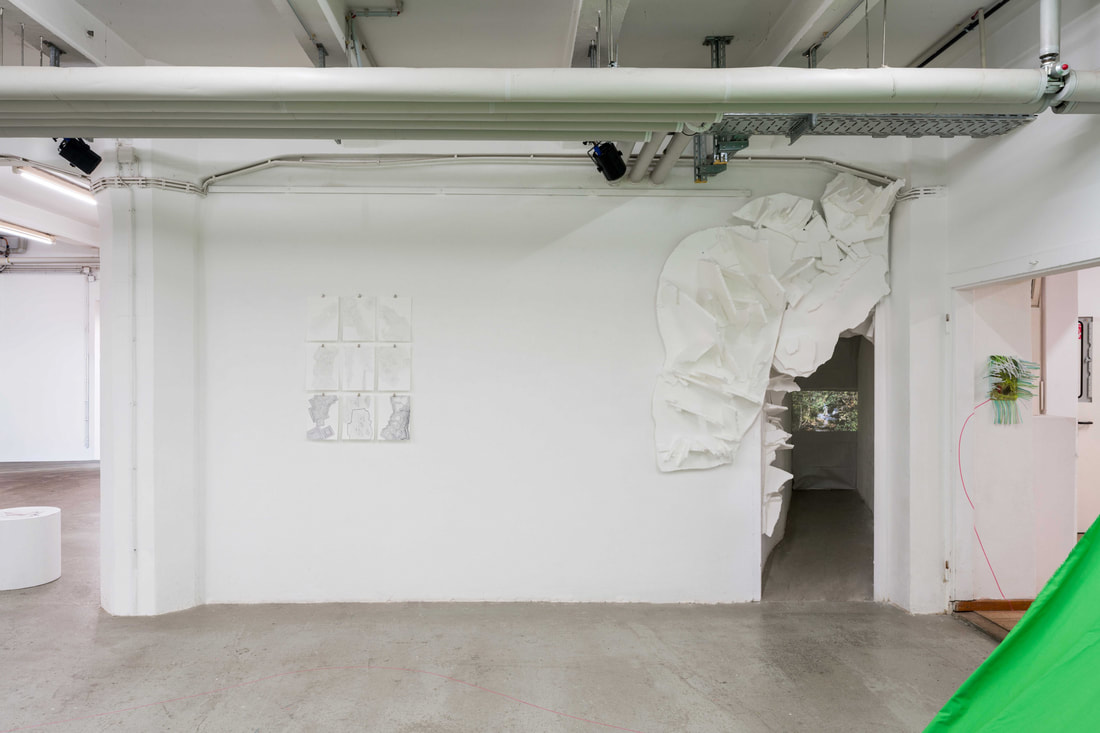
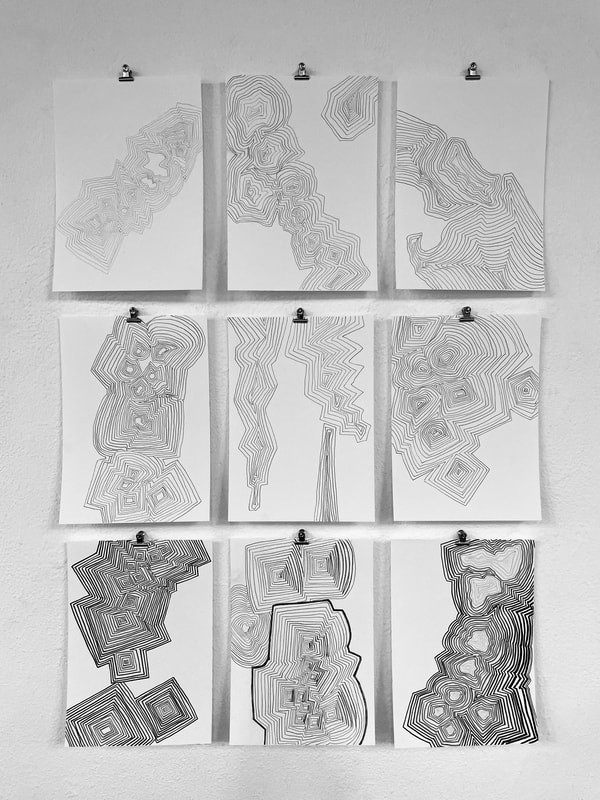
Wandering Icebergs sound and video installation was made for Poetic Maps and Organic Compounds, both MYCELIAart project exhibitions. It consists of a video installed in an ice cave with supported by a real Antarctic soundscape by Philip Samartzis and a series of drawings on paper.
"Wandering Icebergs – An Antarctic Family looking for a New Home" (Antarctica Project VI) is a video installation for the Poetic Maps exhibition, a MYCELIAart collaboration. The work grew from my ongoing fascination with Antarctica as both a real and imagined space. It began as an exploration of worry, displacement, and belonging through the image of drifting icebergs, which I see as stand-ins for migrating bodies navigating change and uncertainty.
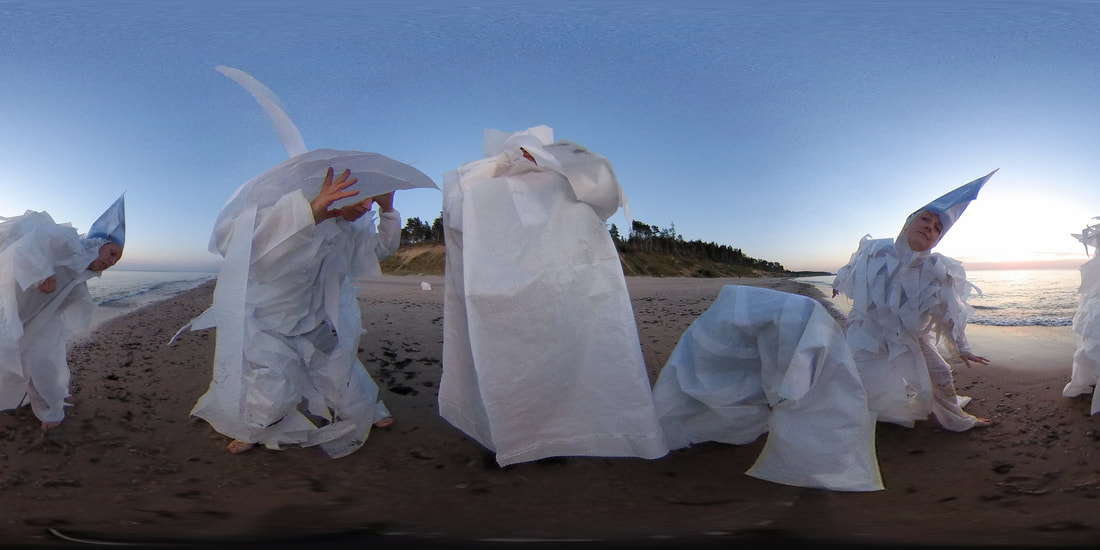
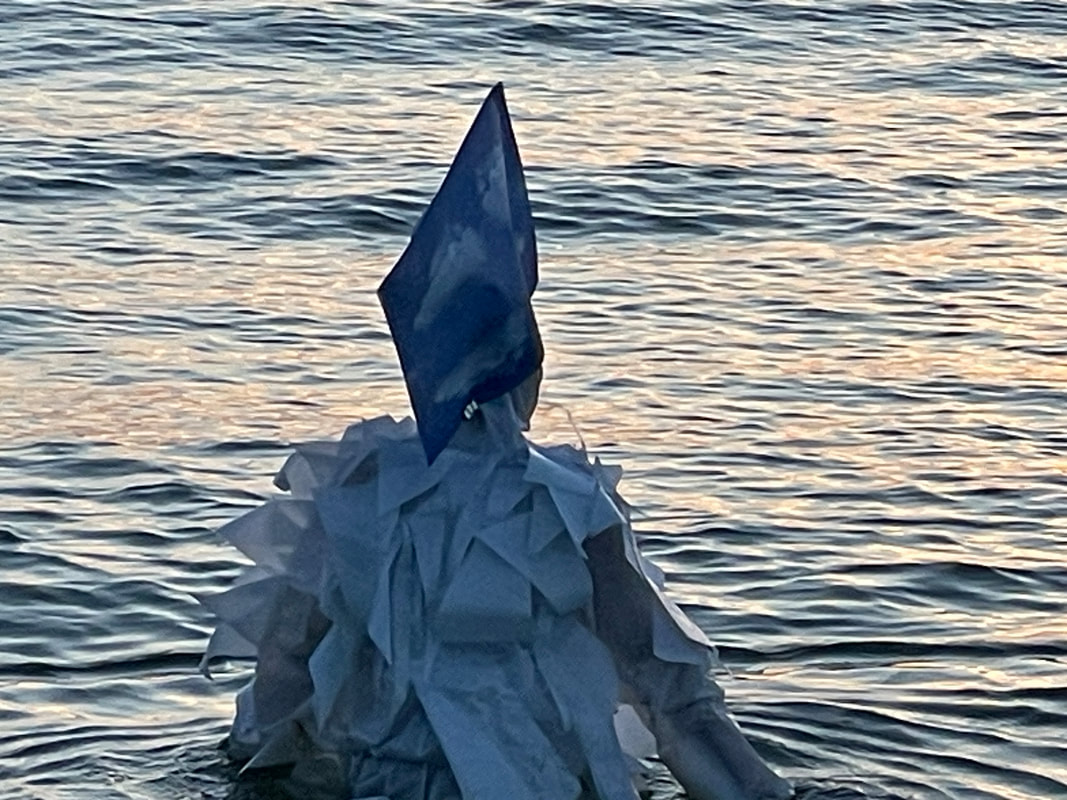
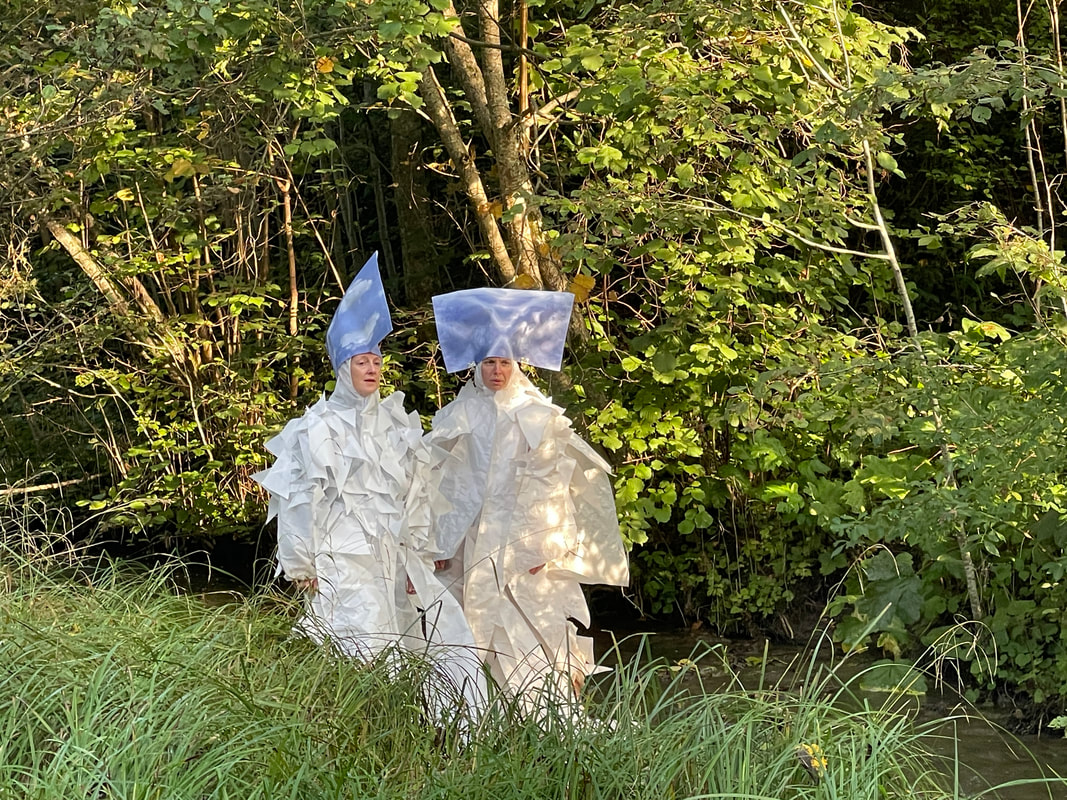
The poetic film shows a family of icebergs who have journeyed and adapted to new climates, foods, languages, habitats and cultures. They have travelled from the south pole, swum the length of the Atlantic Ocean and along rivers. They make landfall in the northern forests of Latvia as they begin to consider the Arctic as a possible new home. We follow them on a small part of their journey. This film was made during an artist residency in Pedvale, Latvia. Artists from MYCELIAart wear and perform in the costumes made during the residency.
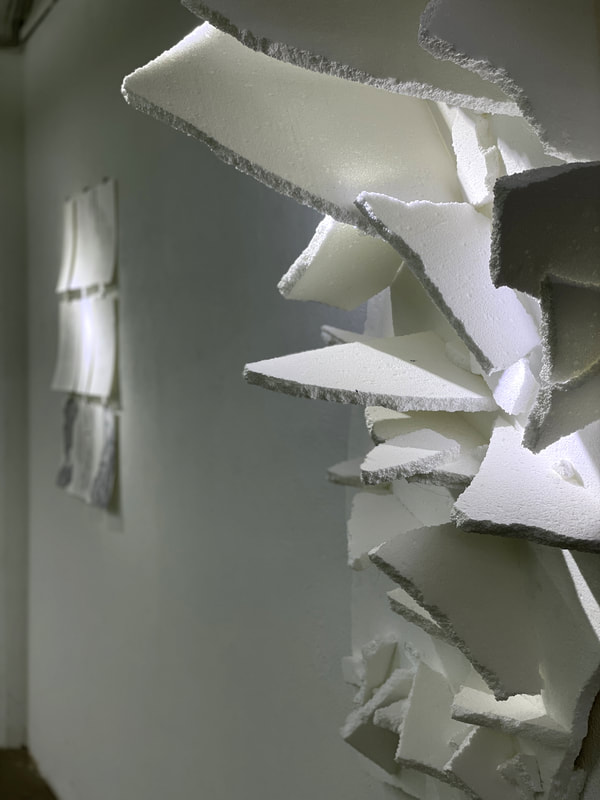
In creating this work, I wanted to build an environment where contradictions can coexist. The ice cave, constructed from polystyrene, mirrors both the appearance of ice and is the basis of cladding used in Europe to insulate homes and make them more energy efficient — a symbol of protection that paradoxically contributes to pollution. Working with this material allows me to hold together the tension between protection and harm, between our longing to preserve and our complicity in ecological loss.
Within this grotto, a film is presented on a screen, accompanied by original Antarctic recordings. The soundscape captures the visceral movements of ice, its cracking, colliding, and shifting presence. The material used for the screen in the cave is the same used to construct the costumes worn by performers in the film, connecting the physical installation to the moving image. Through this migratory narrative, the work positions the icebergs as proxies for displaced bodies, “reverse tourists,” and climate migrants, prompting reflection on who can move, who is immobilized, and how global systems of care might be reimagined. I am also interested in how these icebergs embody endurance, vulnerability, and transformation, becoming a lens through which to think about what it means to move, to belong, and to survive in a changing world.
The installation is expanded by a constellation of related works, including drawings, participatory performances, and a limited-edition artist’s book titled “Coloniantarctical – A Short History of Modern Antarctica”, which collages historical timelines, imagery, and research into a visual essay on colonial ambition and reimagines Antarctica as a site of shared stewardship.
Together, all these elements invite viewers to approach Antarctica not as an empty periphery but as a charged, shared space that makes visible the entanglement of climate, politics, and imagination. And, also as a poetic territory where care and displacement coexist, reminding us that even the most remote place on Earth is deeply connected to us all.
"Wandering Icebergs – An Antarctic Family looking for a New Home" (Antarctica Project VI) is a video installation for the Poetic Maps exhibition, a MYCELIAart collaboration. The work grew from my ongoing fascination with Antarctica as both a real and imagined space. It began as an exploration of worry, displacement, and belonging through the image of drifting icebergs, which I see as stand-ins for migrating bodies navigating change and uncertainty.
The poetic film shows a family of icebergs who have journeyed and adapted to new climates, foods, languages, habitats and cultures. They have travelled from the south pole, swum the length of the Atlantic Ocean and along rivers. They make landfall in the northern forests of Latvia as they begin to consider the Arctic as a possible new home. We follow them on a small part of their journey. This film was made during an artist residency in Pedvale, Latvia. Artists from MYCELIAart wear and perform in the costumes made during the residency.
In creating this work, I wanted to build an environment where contradictions can coexist. The ice cave, constructed from polystyrene, mirrors both the appearance of ice and is the basis of cladding used in Europe to insulate homes and make them more energy efficient — a symbol of protection that paradoxically contributes to pollution. Working with this material allows me to hold together the tension between protection and harm, between our longing to preserve and our complicity in ecological loss.
Within this grotto, a film is presented on a screen, accompanied by original Antarctic recordings. The soundscape captures the visceral movements of ice, its cracking, colliding, and shifting presence. The material used for the screen in the cave is the same used to construct the costumes worn by performers in the film, connecting the physical installation to the moving image. Through this migratory narrative, the work positions the icebergs as proxies for displaced bodies, “reverse tourists,” and climate migrants, prompting reflection on who can move, who is immobilized, and how global systems of care might be reimagined. I am also interested in how these icebergs embody endurance, vulnerability, and transformation, becoming a lens through which to think about what it means to move, to belong, and to survive in a changing world.
The installation is expanded by a constellation of related works, including drawings, participatory performances, and a limited-edition artist’s book titled “Coloniantarctical – A Short History of Modern Antarctica”, which collages historical timelines, imagery, and research into a visual essay on colonial ambition and reimagines Antarctica as a site of shared stewardship.
Together, all these elements invite viewers to approach Antarctica not as an empty periphery but as a charged, shared space that makes visible the entanglement of climate, politics, and imagination. And, also as a poetic territory where care and displacement coexist, reminding us that even the most remote place on Earth is deeply connected to us all.
Kulturwerkstatt Haus 10, Fürstenfeldbruck 2025; Dibulti Art Station, Latvia, 2026